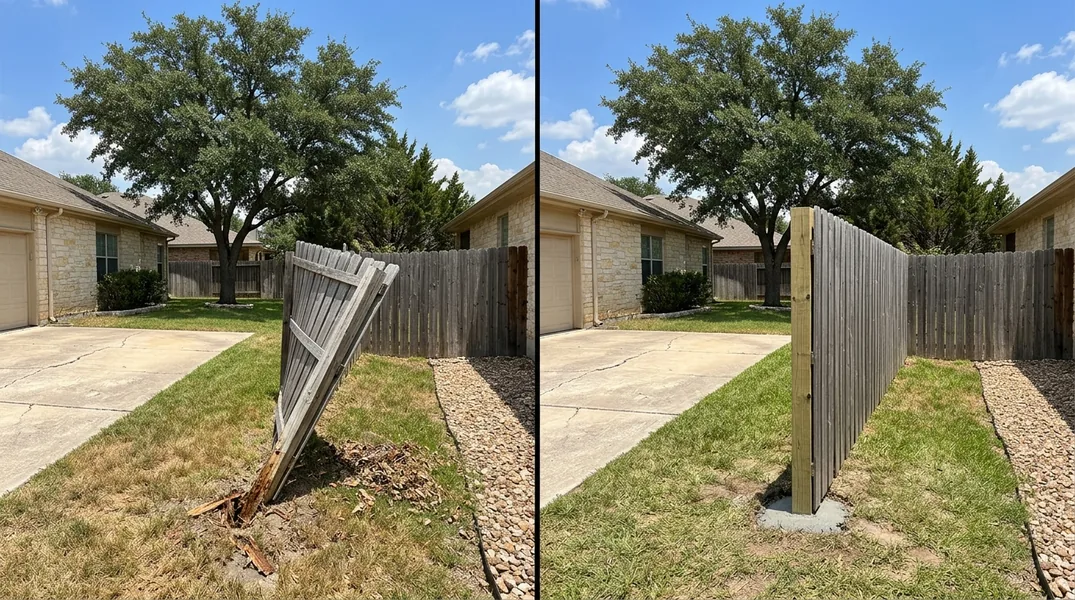
The San Antonio Soil Problem: Why Your Fence Is Leaning
San Antonio homeowners face a unique challenge when it comes to fence stability. The region's heavy clay soil and caliche layer create conditions that are notoriously difficult for fence installation and long-term maintenance. Unlike sandy or loamy soils found in other parts of Texas, the clay-rich earth in San Antonio expands when wet and contracts when dry, creating constant movement around fence posts.
This soil behavior is the primary culprit behind leaning fences throughout the area. When the ground shifts and settles unevenly, fence posts lose their vertical alignment. The problem is compounded by caliche, a hard limestone layer that sits beneath the topsoil in many parts of the region. Caliche makes it difficult to dig deep post holes, which means many fence posts aren't set to an adequate depth to resist the soil's movement. Over time, this shallow foundation causes posts to tilt, and once a fence starts leaning, the structural integrity of the entire installation is compromised.
Rotted Fence Posts: The Hidden Destroyer of Fence Stability
While soil movement is one problem, rotted fence posts are equally destructive and often go unnoticed until significant damage occurs. Wood fence posts are naturally vulnerable to rot in humid climates, and Wood & Privacy Fence Installation in San Antonio requires careful attention to wood treatment and drainage. When water accumulates around the base of a post or when the post remains in contact with moist soil for extended periods, wood begins to decay from the inside out.
The decay process weakens the structural integrity of the post, reducing its ability to support the weight of fence panels and pickets. A rotted post may look solid on the surface while being hollow or severely compromised beneath. This is why a leaning fence that appears to be a soil problem might actually be caused by one or more rotted posts that can no longer bear their load. In many cases, homeowners don't realize the posts are rotting until the fence has already started to shift noticeably. Regular inspection of your fence, especially near the ground line, can catch rot early before it causes catastrophic failure.
Leaning Fence Repair: When You Need Professional Help
Leaning fence repair is not a simple DIY project for most homeowners, especially in San Antonio's challenging soil conditions. While minor tilts might seem like a cosmetic issue, a leaning fence indicates structural problems that will only worsen over time. The weight of fence panels creates leverage that increases the tilt, and weather events like heavy rain or wind can accelerate the process. If your fence leans more than an inch or two over a six-foot section, it's time to call in professionals who understand the local soil conditions and have the right equipment to fix the problem properly.
The repair approach depends on the root cause. If soil settlement is the issue, the post may need to be re-set deeper or repositioned with concrete reinforcement. If rot is the culprit, the post must be replaced entirely. A professional inspection can determine whether you need fence post repair or complete fence post replacement. Attempting to straighten a fence by simply pushing it back into place won't solve the underlying problem and could damage the fence structure further. San Antonio Fence Company has the expertise to diagnose the exact cause of your leaning fence and recommend the most cost-effective solution.
Fence Post Replacement: The Permanent Solution for Rotted Posts
Fence post replacement is often the most practical solution when rot has compromised a post's structural integrity. Replacing rotted posts individually is more economical than replacing an entire fence, and modern techniques allow professionals to remove and install new posts without disturbing the fence panels or pickets. The key is using rot-resistant wood or properly treated posts that will withstand San Antonio's moisture conditions for decades to come.
When a post is replaced, proper installation is critical. The new post must be set at an appropriate depth to resist soil movement, and it should be treated or sealed to prevent future rot. Some homeowners opt for composite or treated posts that offer superior rot resistance compared to untreated wood. The concrete footing around the new post should be installed with proper drainage to prevent water from pooling around the base. If multiple posts show signs of rot, it's worth considering whether your entire fence is approaching the end of its serviceable life, or if targeted fence post replacement will extend its usefulness for many more years.
Rotted Fence Post Repair: Can Your Posts Be Saved?
Rotted fence post repair is sometimes possible if the rot is caught early and is limited to a small area of the post. Surface-level rot can occasionally be treated with wood hardener and sealant, which arrests the decay and prevents it from spreading further. However, this approach only works if the structural integrity of the post is still intact and the rot hasn't penetrated deeply into the wood. A professional assessment is essential because what looks like a minor problem on the surface could indicate extensive internal damage.
In many cases, partial repairs are temporary solutions that delay the inevitable need for replacement. If rot has reached the ground line or the base of the post, repair is rarely effective because that's where moisture accumulation is worst. Once rot compromises the section of the post that bears the most stress, the post's ability to support the fence is compromised permanently. Rather than invest in repairs that may fail within a year or two, replacing the post is the smarter long-term choice. San Antonio Fence Company can assess your posts and recommend whether repair or replacement makes sense for your specific situation. Contact us today for a free estimate on fence post repairs or replacement.
Preventing Future Fence Problems: Maintenance and Installation Best Practices
The best approach to leaning fences and rotted posts is prevention. When installing a new fence in San Antonio, proper installation techniques tailored to local soil conditions make all the difference. Posts should be set deeper than standard recommendations, and concrete footings should include drainage measures to prevent water from pooling around the base. Using pressure-treated lumber or rot-resistant materials adds years to your fence's lifespan. Regular maintenance, including annual inspections and prompt repairs of damaged areas, can catch problems before they become expensive.
Homeowners should inspect their fences at least once or twice per year, looking for signs of leaning, soft spots in posts, discoloration, or areas where wood feels spongy. Keep the area around fence posts clear of mulch and debris that can trap moisture. Ensure that gutters and downspouts direct water away from your fence line, and consider installing a drainage system if water naturally pools near your fence. If you're planning a new Wood & Privacy Fence Installation or need to repair an existing fence, choosing a contractor familiar with San Antonio's unique soil and climate challenges is essential. Call San Antonio Fence Company at (830) 266-4023 to discuss your fence needs and get professional recommendations based on your property's specific conditions.
Looking for a professional tree service in San Antonio? San Antonio Fence Company responds fast for all your fence needs.
Get a Free Quote