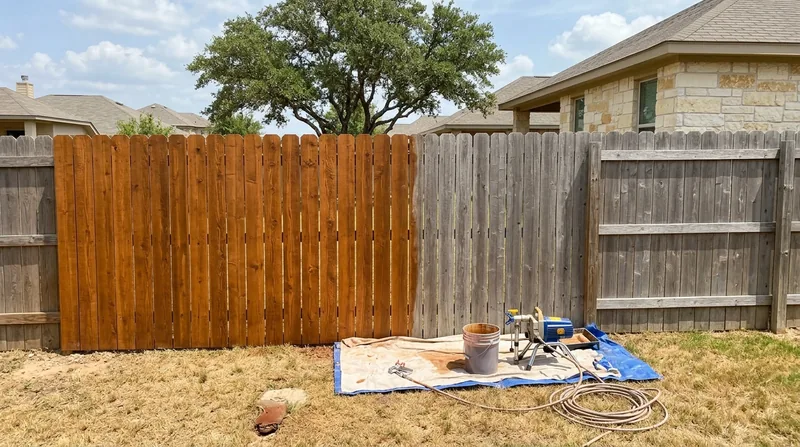




Fence staining in San Antonio is not optional if you want your cedar fence to survive the heat, humidity, and sun that define our climate. A well-maintained wood fence can last 15 to 20 years; without regular cleaning and sealing, the same fence will gray, splinter, and rot at the ground line within five to seven years. The San Antonio sun is relentless, and our clay soil holds moisture at the base of posts, creating the perfect conditions for wood decay. We clean, brighten, and seal cedar fences to restore their appearance and extend their working life under brutal conditions. If your fence is graying, weathered, or showing soft spots at the base, staining and restoration is often the smarter spend than replacement. Let us show you what's salvageable and what the cost looks like.
Why Cedar Fence Staining Matters in San Antonio
Cedar is the wood of choice for privacy fences across San Antonio and the surrounding Hill Country because it resists rot better than pressure-treated pine and looks better from day one. But cedar is not fireproof against sun and moisture. The moment a cedar fence is installed, the clock starts. UV rays bleach the surface gray, rain and humidity penetrate the grain, and at the ground line where posts sit in concrete, the wood absorbs moisture and begins to fail. Staining and sealing slow that process dramatically by creating a protective barrier that sheds water and reflects UV light.
- We clean the fence with pressure and soft-bristle techniques to remove mildew, algae, and weathered surface fibers without gouging the wood.
- We brighten cedar back to its natural color, restoring the appearance of a fence that looks five to ten years newer.
- We apply penetrating stain and sealer formulated for San Antonio's heat and humidity to protect against UV, water, and decay.
- A properly stained cedar fence resists rot and maintains its structural integrity for years longer than untreated wood.
Done right, staining doubles the usable life of a cedar fence under our climate. Done poorly or skipped, a fence deteriorates fast.
Key info: Cedar fences in San Antonio need cleaning and re-staining every two to three years because of sun exposure and humidity. Pressure-treated pine fences stain less frequently but do not look as good and are less rot-resistant at the base. We tell you which material you have and what schedule makes sense for your fence.
For more on the durability of wood fences in our climate, see our wood and privacy fence installation page.
How We Clean, Stain, and Seal Your Cedar Fence
Fence staining is a multi-step process, and the quality of each step determines how long the stain holds and how good the fence looks. We start by inspecting the entire fence for soft wood, loose boards, and structural problems. If a post or rail is too far gone, we address that first. Then we clean, brighten, and seal. The work is labor-intensive but straightforward, and we do it the same way every time.
- We inspect the fence for rot, loose fasteners, and boards that need replacement before staining begins.
- We pressure-wash the fence at a controlled PSI to remove mildew, algae, and weathered surface without splintering the wood.
- We allow the wood to dry completely, which typically takes 48 to 72 hours depending on humidity and weather.
- We apply a brightening agent to restore the natural cedar color and open the grain for better stain penetration.
- We apply a penetrating oil-based or water-based stain formulated for cedar, working all surfaces including the underside of rails and the top of posts.
- We finish with a clear or tinted sealer to lock in color and provide UV and water protection.
The entire process, from inspection through final coat, typically takes three to five days depending on fence length and weather. We work around your schedule and keep the fence accessible during drying periods.
Local example: A homeowner in Boerne with a 150-linear-foot cedar privacy fence called us after noticing gray weathering and soft spots at the base of two posts. We replaced those posts, cleaned the entire fence, applied brightening agent, stained with a semi-transparent cedar stain, and sealed. The fence looked new again and was protected for another two to three years. The cost was less than half what a full fence replacement would have been.
If your fence needs structural work before staining, we handle that too. See our fence post repair and replacement page for details on how we address rot and leaning posts.
Fence Staining Methods: Choosing the Right Approach
| Approach | Description | Best for |
|---|---|---|
| Pressure wash and seal only | Deep cleaning with water and mild detergent, then clear sealer applied. No color change, just restoration of the natural wood tone. | Fences that are still structurally sound and only need cleaning and protection from further weathering. |
| Brightening and semi-transparent stain | Chemical brightening followed by penetrating stain that shows the wood grain while adding color and protection. | Fences that are grayed or weathered but not rotted, where you want the wood to look natural and new. |
| Solid color stain with sealer | Opaque stain that covers the wood grain and provides the most UV and water protection. Available in cedar, brown, gray, and custom colors. | Fences with multiple wood tones or blemishes, or where maximum protection and a specific color are required. |
| Stain plus structural repair | Post replacement, loose board repair, or rail tightening done before staining. Ensures the fence is sound before protection is applied. | Fences with rot, leaning posts, or loose boards that need fixing before staining will make a difference. |
The right approach depends on the current condition of your fence and how long you want it to last. We assess the fence on site and recommend the method that gives you the best return on your investment.
Fence Staining & Restoration Cost in San Antonio: What to Expect
Fence staining cost in San Antonio depends on several concrete factors: the length of the fence, the current condition, whether structural repair is needed, and the stain and sealer you choose. A simple pressure wash and seal on a well-maintained 100-linear-foot cedar fence costs less than a full brightening, stain, and seal on a 200-linear-foot fence with soft spots and weathering. We price by the linear foot, and most residential jobs fall in a predictable range.
Starting costs for basic staining begin around $950 for a smaller project, but that figure moves up with fence length, condition, and the scope of prep work. A fence with rot, loose boards, or structural issues will cost more because we repair before staining. Solid-color stains cost more than semi-transparent stains because they require thicker application. The sealer you choose also affects price.
The best way to know your cost is to get a free estimate. We schedule an on-site inspection, measure the fence, assess condition, and give you a detailed quote with a breakdown of labor, materials, and timeline. See our full pricing overview for additional context on how we structure estimates.
We recommend getting two or three estimates from local fence contractors so you can compare pricing and approach. Staining is not a commodity service, and the quality of the prep work and the materials used make a real difference in how long the stain holds. The cheapest estimate is not always the best value.
Fence Staining & Restoration Near Me: What San Antonio Homeowners Should Know
Finding a fence staining contractor near you in San Antonio means looking for someone who knows cedar, understands our climate, and has the equipment and crew to do the work right. We are a local shop, not a national franchise, and the same crew that estimates your fence does the staining. We have been in business since 2015, and we are fully insured and bonded. We are also members of the American Fence Association, which means we stay current on materials and best practices.
When you call for an estimate, ask about the contractor's experience with cedar in our climate, what products they use, and how they handle fences with structural issues. Ask for references from recent staining jobs and follow up with those homeowners. Get a written estimate that breaks down labor, materials, and timeline. Make sure the contractor is fully insured and bonded, and verify that they carry general liability and workers compensation coverage.
You should also understand that some fences are not worth staining. If a fence has extensive rot, multiple failed posts, or severe structural damage, replacement may be the smarter spend than restoration. We will tell you honestly whether staining makes sense or whether you should plan for a new fence. That kind of straight talk is what separates a local shop from a sales operation.
Ready to schedule a free estimate? Call us at (830) 266-4023 or visit our contact page to request an inspection. We respond within 24 hours and can typically schedule work within two to three weeks depending on season.
Fence Staining & Restoration in San Antonio: Pricing Guide
| Service | Price | Details |
|---|---|---|
| Pressure wash and seal | Starting at $950 | Cleaning and clear sealer for well-maintained fences, cost scales with linear footage and current condition |
| Brightening and semi-transparent stain | Starting at $1,200 | Full cleaning, brightening agent, penetrating stain, and sealer for grayed or weathered cedar fences |
| Solid color stain with sealer | Starting at $1,400 | Opaque stain in cedar, brown, gray, or custom color with maximum UV and water protection for longer-lasting results |
| Stain plus structural repair | On estimate | Post replacement, loose board repair, or rail tightening combined with full staining; requires on-site inspection for accurate pricing |
| Travel and mobilization | Included | No separate charge for service calls within San Antonio and surrounding service area; mileage is built into our pricing |
| Free estimate | Free | On-site inspection, measurement, condition assessment, and written quote with no obligation to book; response within 24 hours |
Indicative pricing, free personalized estimate within 24h at (830) 266-4023.


